Secondary Ion Mass Spectroscopy ION-TOF TOF.SIMS5
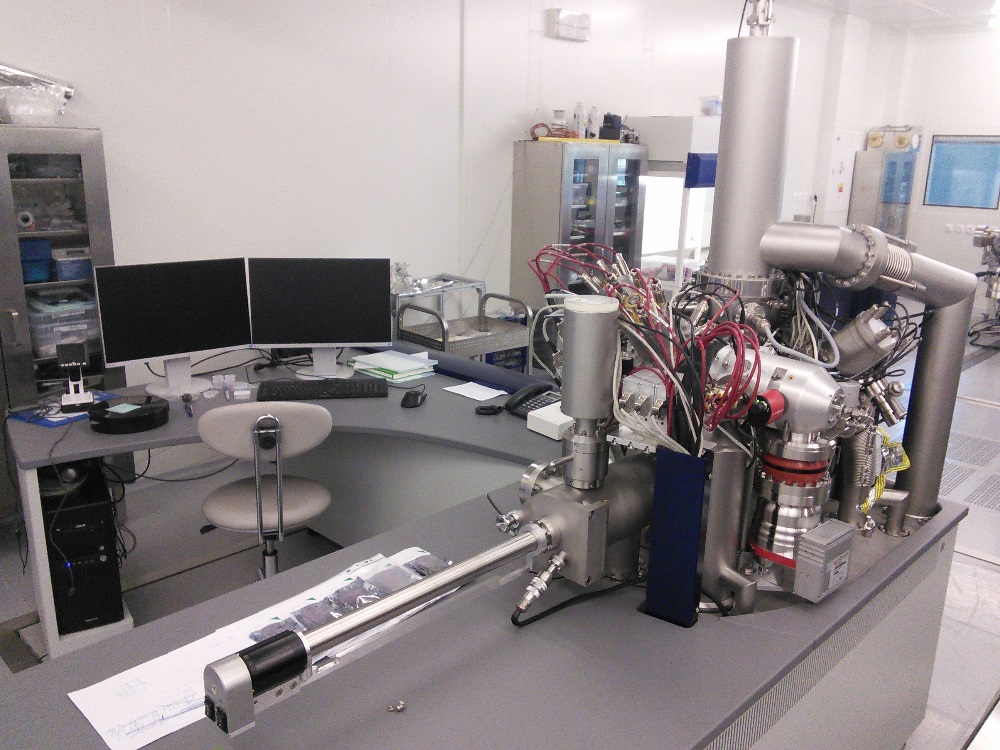
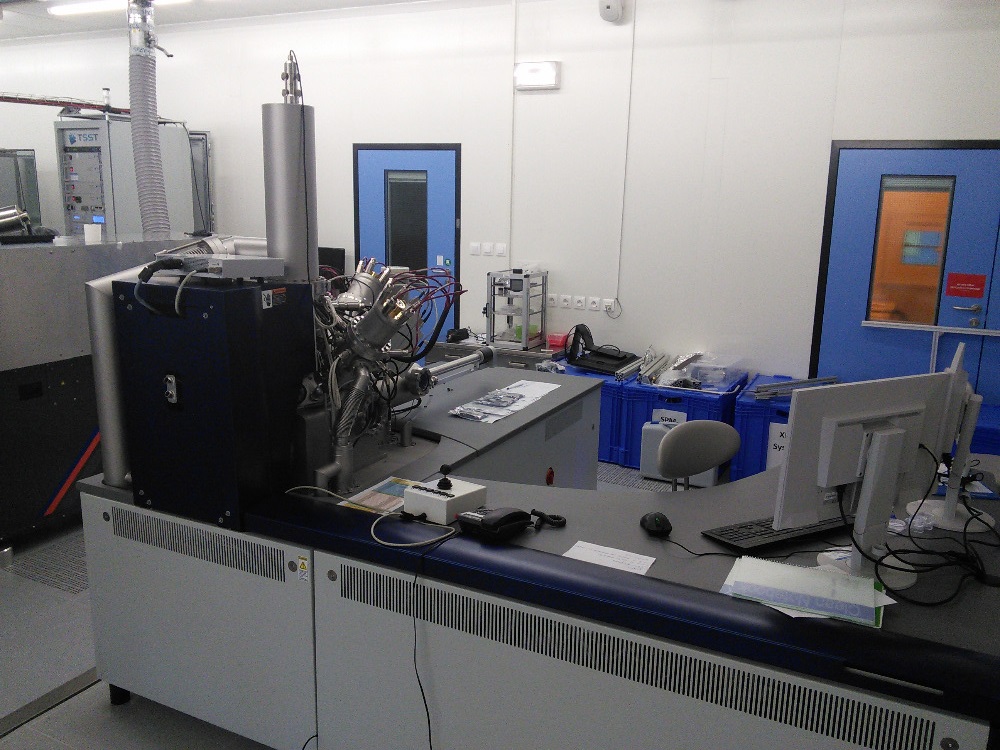
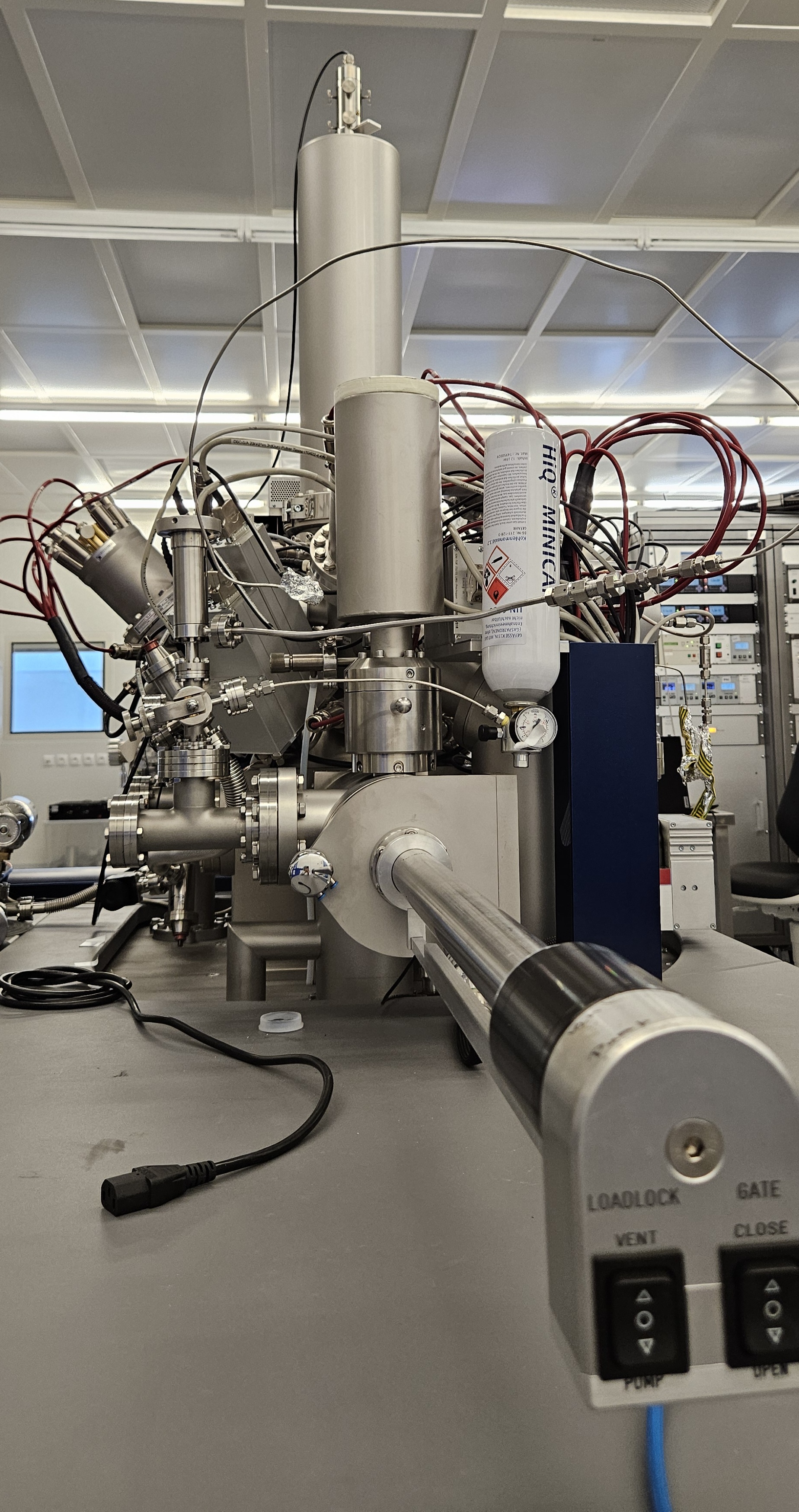
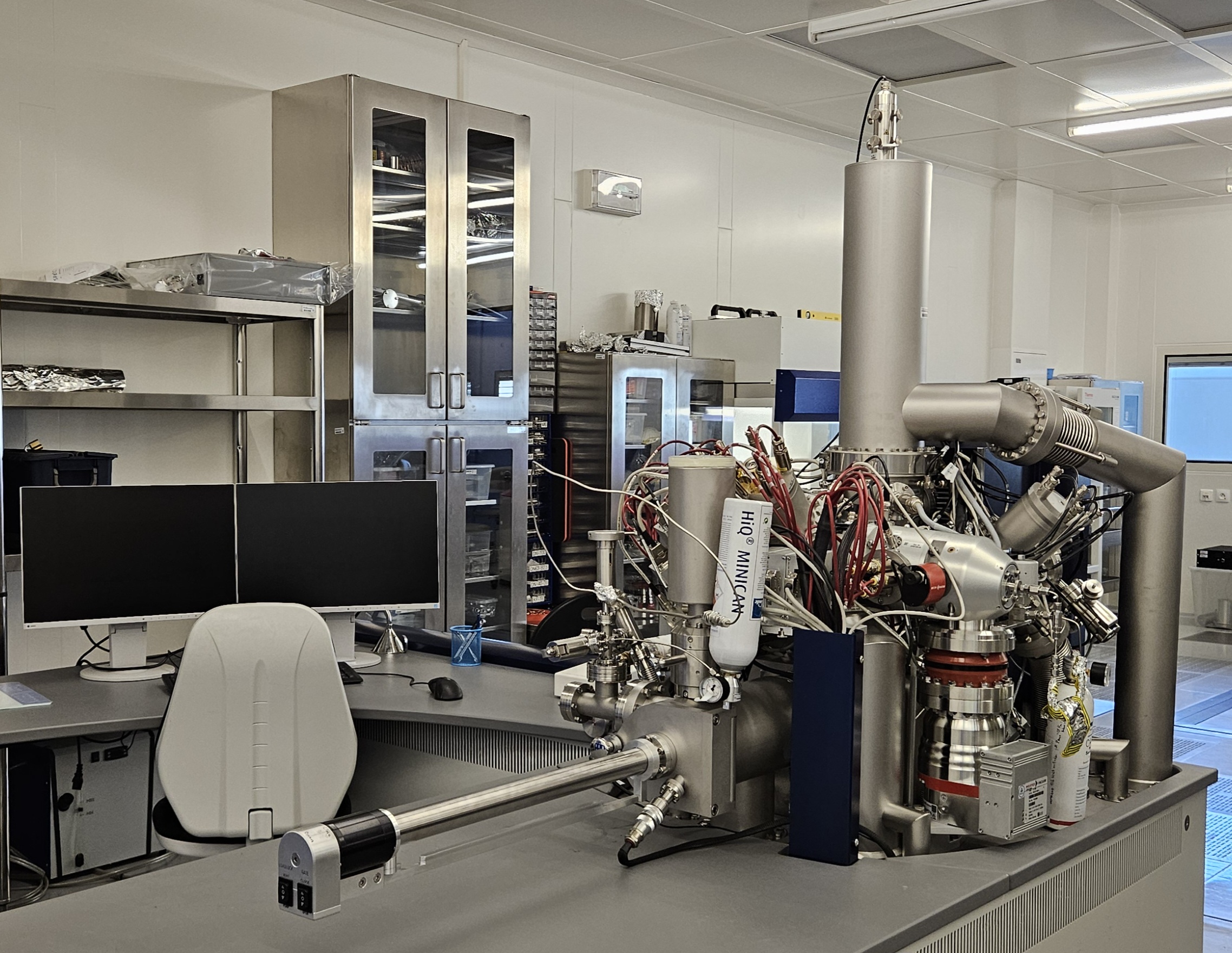
TOF-SIMS is an acronym for the combination of the analytical technique SIMS (Secondary Ion Mass Spectrometry) with Time-of-Flight mass analysis (TOF). The technique provides detailed elemental and molecular information about the surface, thin layers, interfaces of the sample, and gives a full three-dimensional analysis. For a TOF-SIMS analysis, a solid surface is bombarded by primary ions of some keV energy. The primary ion energy is transferred to target atoms via atomic collisions and a so-called collision cascade is generated. Part of the energy is transported back to the surface allowing surface atoms and molecular compounds to overcome the surface binding energy. The interaction of the collision cascade with surface molecules is soft enough to allow even large and non-volatile molecules with masses up to 10,000 u to escape without or with little fragmentation. Sputtering is achieved by a sputter beam of reactive species (O2 or Cs) at low energy for increased sensitivity, high depth resolution, and short transients. Analysis is performed by a short pulse length and small spot size ion beam for high mass and lateral resolution. By digitally scanning the bismuth analysis beam, high spatial resolution ion images of all secondary ions from the sample surface are produced. By sputtering the sample surface simultaneously by cesium or oxygen beam, images from increasing depth are obtained and hence three dimensional data are collected. The TOF.SIMS 5 is the latest generation of high-end TOF-SIMS instruments developed by IONTOF Company. Its design guarantees optimum performance in all fields of SIMS applications. The instruments offers three ion sources offering Bi1–7+, Cs+ and O2+ and is equipped with a reflectron TOF analyzer giving high secondary ion transmission with high mass resolution (up to 11,000), a sample chamber with a 5-axis manipulator (x, y, z, rotation and tilt) for flexible navigation, charge compensation for the analysis of insulators, a secondary electron detector for SEM imaging. Samples can be heated and cooled if analysis of volatiles is needed (-130°C to + 600°C with a precision of +/- 1°C). In a TOF-SIMS experiment the primary ion beam is pulsed to get good mass resolution. Consequently the current density and also the resulting erosion speed is very low (< 0.1nm/min). Therefore, depth profiling and 3D analysis with a TOF-SIMS instrument is done in the so-called dual beam mode. While the first beam (Cs+ or O2+) is sputtering a crater, the second beam (Bi1–7+ ) is progressively analyzing the crater bottom. The key advantage of the dual beam mode is the possibility to adjust the analysis and the sputter parameter independently, e. g. the combination of a low energy sputter beam of O2 or Cs to increase the yield of positively and negatively charged secondary ions, with a high-energy, well-focused beam of the Bi cluster source. The 30 keV Bi Nanoprobe cluster provides high data rates and an ultimate lateral resolution of down to 80 nm. This gun is also equipped with the BiMn cluster ion emitter providing also Mn ions for G-SIMS analysis. SIMS depth profiling of organic or inorganic samples may suffer from the formation of ion beamed induced surface roughening. This effect limits the achievable depth resolution and can also lead to different erosion rates. Sample roughening can effectively be avoided by using fast sample rotation during sputtering which is provided by special sample stage.
Specification
- Typical mass resolution is 5,000 @ 29u and a spot size of < 300nm for Bi1.
- An ultimate mass resolution is > 11,000 @ 29u.
- The mass resolution at higher mass (> 200u) exceeds 16,000.
- An ultimate lateral resolution is ~ 80nm.
- An electron impact source can be operated with O2, Ar, and Xe, minimum energy is 200eV or lower to ensure optimum depth resolution.
- A thermal ionization Cs source, minimum energy should be 200eV or lower to ensure optimum depth resolution.
Gallery
Publications
Papež, N.; Gajdoš, A.; Dallaev, R.; Sobola, D.; Sedlák, P.; Motúz, R.; Nebojsa, A.; Grmela, L., 2020: Performance analysis of GaAs based solar cells under gamma irradiation. APPLIED SURFACE SCIENCE 510, p. 145329-1 - 145329-8, doi: 10.1016/j.apsusc.2020.145329 (WITEC-RAMAN, HELIOS, SIMS)
ŠETKA, M.; BAHOS, F.; MATATAGUI, D.; POTOČEK, M.; KRÁL, Z.; DRBOHLAVOVÁ, J.; GRÁCIA, I.; VALLEJOS VARGAS, S., 2020: Love wave sensors based on gold nanoparticle-modified polypyrrole and their properties to ammonia and ethylene. SENSORS AND ACTUATORS B: CHEMICAL 304, p. 1 - 10, doi: 10.1016/j.snb.2019.127337 (TITAN, SIMS, ICON-SPM, HELIOS)
UHLÍŘ, V.; PRESSACCO, F.; ARREGI URIBEETXEBARRIA, J.; PROCHÁZKA, P.; PRŮŠA, S.; POTOČEK, M.; ŠIKOLA, T.; ČECHAL, J.; BENDOUNAN, A.; SIROTTI, F., 2020: Single-layer graphene on epitaxial FeRh thin films. APPLIED SURFACE SCIENCE 514, p. 145923-1 - 7, doi: 10.1016/j.apsusc.2020.145923 (MAGNETRON, VERSALAB, RIGAKU9, UHV-LEEM, UHV-LEIS, UHV-SPM, UHV-XPS, SIMS)
SOBOLA, D.; RAMAZANOV, S.; KONEČNÝ, M.; ORUDZHEV, F.; KASPAR, P.; PAPEŽ, N.; KNÁPEK, A.; POTOČEK, M., 2020: Complementary SEM-AFM of Swelling Bi-Fe-O Film on HOPG Substrate. MATERIALS 13 (10), p. 1 - 15, doi: 10.3390/ma13102402 (KRATOS-XPS, SIMS, WITEC-RAMAN, LYRA)
HOLEŇÁK, R.; SPUSTA, T.; POTOČEK, M.; SALAMON, D.; ŠIKOLA, T.; BÁBOR, P., 2019: 3D localization of spinel (MgAl2O4) and sodium contamination in alumina by TOF-SIMS. MATERIALS CHARACTERIZATION 148, p. 252 - 7, doi: 10.1016/j.matchar.2018.12.019 (SIMS, VERIOS)
Kunc, J.; Rejhon, M.; Dědič, V.; Bábor, P., 2019: Thickness of sublimation grown SiC layers measured by scanning Raman spectroscopy. JOURNAL OF ALLOYS AND COMPOUNDS 789, p. 607 - 612, doi: 10.1016/j.jallcom.2019.02.305 (DEKTAK, SIMS)
DRDLÍK, D.; ROLEČEK, J.; DRDLÍKOVÁ, K.; SALAMON, D., 2018: Restraining of calcium contamination in near-net shape alumina ceramics during slip casting. INTERNATIONAL JOURNAL OF APPLIED CERAMIC TECHNOLOGY 15 (6), p. 1559 - 8, doi: 10.1111/ijac.13042 (LYRA, SIMS)